

NEWS
NEWS
What Should We Do if Neighborhood Disputes Caused by Elevators in Old Residential Areas? -- A Typical Case of Applying Civil Code Issued by the Court of Guizhou Province
2024-05-14
author:
Page view:
What Should We Do if Neighborhood Disputes Caused by Elevators in Old Residential Areas? -- A Typical Case of Applying Civil Code Issued by the Court of Guizhou Province
Core Tip: What should I do if the installation of elevators in old neighborhoods causes neighborhood disputes? -- Li Moumou, Peng Moumou and other cases of obstruction with Wang Moumou
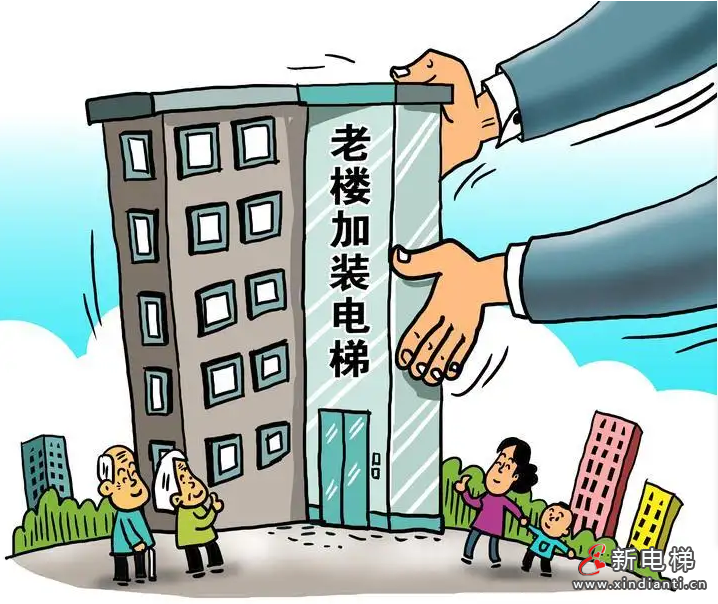
What should we do if the installation of elevators in the old residential quarters causes neighborhood disputes? -- The case of Li Moumou, Peng Moumou and Wang Moumou excluding obstruction
01. [Summary of Referee]]
The installation of elevators in old communities is a practical project implemented by the government to adapt to economic and social development and meet the needs of an aging population. Some owners refused to install elevators to affect their lighting, ventilation, noise, the court did not support. Signed to agree to install the elevator after the back, in violation of the principle of good faith, should not be recognized by the back of the act. The owner shall provide the necessary convenience for the installation of the elevator, and give a certain degree of tolerance to the inconvenience that may exist, and hinder the elevator.InstallationShould be ruled in accordance with the law to stop the elevator installation and construction of obstruction and obstruction.
02. [Basic Case]]
A unit of a residential area in Yunyan District of Guiyang City agreed to install elevators through negotiation by 17 owners including the original defendant, and signed the consent form and power of attorney, entrusting the plaintiffs Li and Peng to handle all the affairs of installing elevators. The elevator installation project has been applied to the housing and construction department and the market supervision department for filing and approval, and has also been reported to the street office. Subsequently, the plaintiff publicized the elevator design plan to all owners of the unit building, and all owners did not raise any objection. After the expiration of the publicity period, the defendant Wang Moumou blocked the installation on the grounds that the elevator installation affected its lighting and ventilation. In order to minimize the impact on the defendant, the plaintiff commissioned a third party to make changes to the existing project plan and incur design fees, but the defendant once again obstructed the advancement of the elevator installation project. Then Li Moumou, Peng Moumou and others sued Wang Moumou to the court, requesting Wang Moumou to immediately remove the obstruction, stop obstructing the elevator installation and construction, and compensate for the cost of changing the design.
03. [Referee Results]]
The People's Court of Yunyan District held that the addition of elevators in the community unit has obtained the consent of the corresponding proportion of owners in accordance with the law, and has passed the publicity, filing and administrative approval procedures. The installation of elevators is a legal act, and at the same time, in order to reduce the impact on the owner, The elevator installation plan has also been changed, so the defendant should cooperate with and must not obstruct the plaintiff's installation of elevators. After mediation, the following agreement was reached: 1. Wang Moumou will not hinder the normal installation and construction of elevators by Li Moumou and Peng Moumou under the existing position conditions; 2. Li Moumou and Peng Moumou to voluntarily give up the rest of the litigation claims.
04. [Case Interpretation]]
With the aggravation of population aging and the promotion of new urbanization, the installation of elevators in old residential areas as an important livelihood project is not only conducive to alleviating the travel difficulties of the elderly, but also a powerful measure to promote the transformation of old residential areas. This case actively protects the behavior of installing elevators in old residential areas in a reasonable way through democratic decision-making, highlights the value concept of justice for the people, and promotes the socialist core values of harmony, friendliness and civilization. it is conducive to building a modern community of unity, mutual assistance, civilization and harmony, and building a harmonious neighborhood relationship. At the same time, this type of dispute involves people's livelihood issues, has a high degree of social attention, and is easy to cause a chain reaction. The judge starts from reason, clarifies the legal provisions and consequences, urges the two parties to reach an agreement, and finally the mediation is successful. "Three reforms" and promote the resolution of mass livelihood disputes play a positive role in demonstrating.
05. [Relevant Articles]]
Article 278 of the the People's Republic of China Civil Code The following matters shall be jointly decided by the owners: ...... (VII) the alteration and reconstruction of the building and its ancillary facilities; ...... The matters jointly decided by the owners shall be voted on by the owners whose area of the exclusive part accounts for more than 2/3 and whose number accounts for more than 2/3. Decisions on the matters specified in Items 6 to 8 of the preceding paragraph shall be approved by the owners whose voting area is more than 3/4 and the number of owners whose voting is more than 3/4. Decisions on other matters in the preceding paragraph shall be approved by more than half of the owners of the exclusive part of the voting area and more than half of the number of owners participating in the voting.
Article 292 of the the People's Republic of China Civil Code Where the right holder of a real estate must use adjacent land or buildings for the construction or repair of buildings and the laying of wires, cables, water pipes, heating and gas pipelines, etc., the right holder of the land or building shall provide the necessary convenience.
Q: What are the legal procedures for installing elevators?
The installation of elevators must comply with relevant laws and regulations, that is, obtain the consent of a certain percentage of owners stipulated by the law, and apply for relevant planning approval, elevator construction start notification and construction permits in accordance with regulations. One is to report the installation of elevators to the owners for a joint resolution, and only when the corresponding proportion of people agree can it be implemented. The second is to do a good job in communication and consultation with relevant owners affected by the installation of elevators. The third is to sign relevant agreements, prepare all other materials required for construction, and apply to the administrative department for construction and installation procedures.
Q: How to calculate the number of owners and the area of the exclusive part?
According to the relevant provisions of the Guiding Rules of the Owners' Congress and the Owners' Committee, 1. The number of owners is calculated according to the number of exclusive parts. If an exclusive part is calculated by one person, and an exclusive part is shared by more than two people, one person is elected to exercise the voting right. The number of owners is also one. 2. The area of the exclusive part shall be calculated according to the area recorded in the real estate register; if it has not been registered, it shall be temporarily calculated according to the measured area of the surveying and mapping institution; if it has not been measured, it shall be temporarily calculated according to the area recorded in the housing sales contract.
Q: No money was paid when the elevator was installed. Can it be used free of charge after it is put into use?
The installation of elevators is funded by the co-constructors, which belongs to the exclusive property rights shared within the scope of the funders, and the unfunded residents of the same building do not enjoy the right to use them free of charge. After the additional elevator is put into use, the owner who requires the use of the additional elevator results should actively negotiate with other owners, obtain the consent of other owners and pay the corresponding fees before using the elevator.
Q: What are the obligations of the owner to sell the house after agreeing to install the elevator?
When the property right of the house owner of the building where the elevator is installed changes, the relevant rights and obligations of the elevator shall be inherited by the owner of the house after the change. Among them, if the owner of the installation of the elevator transfers the ownership of the house by means of sale, gift, etc., it shall inform the other owners of the installation of the elevator in writing, and clearly inform the transferee of the rights and obligations of the installation of the elevator in the house sale contract and the gift contract.
Q: Can the owners' meeting agree on other rules for the adoption of resolutions?
Joint management matters are the most important autonomous content of the owners, and the legal effect of the rules for the adoption of other resolutions agreed on by themselves should be recognized. In judicial practice, for cases where there is a special agreement on the owners' resolution rules, the voting ability of the owners' voting rights and the effectiveness of the resolution should be judged according to the agreement. However, the self-agreement shall be limited by this article, that is, the proportion of the special agreement made by the owners' assembly on this matter shall not be lower than the proportion required by the second paragraph of Article 278 of the Civil Code.
Source: Guizhou High Court, New Elevator Network
If there is infringement, contact Li delete
Keywords:
AVIC Elevator Equipment, AVIC Elevator, Elevator Sales, AVIC Elevator Sales, Elevator Maintenance
Contact us

Address: Emei Mountain Road, Gaoping Industrial Park, Huichuan District, Zunyi City
Public account
Mobile terminal
Copyright © 2024 CHINA AVIATION GUIZHOU ELEVATOR CO.,LTD All Rights Reserved