

MENU

Related to the installation of elevators in old residential areas, the latest national document!

2024-05-14

author:

Page view:


Related to the installation of elevators in old residential areas, the latest national document!

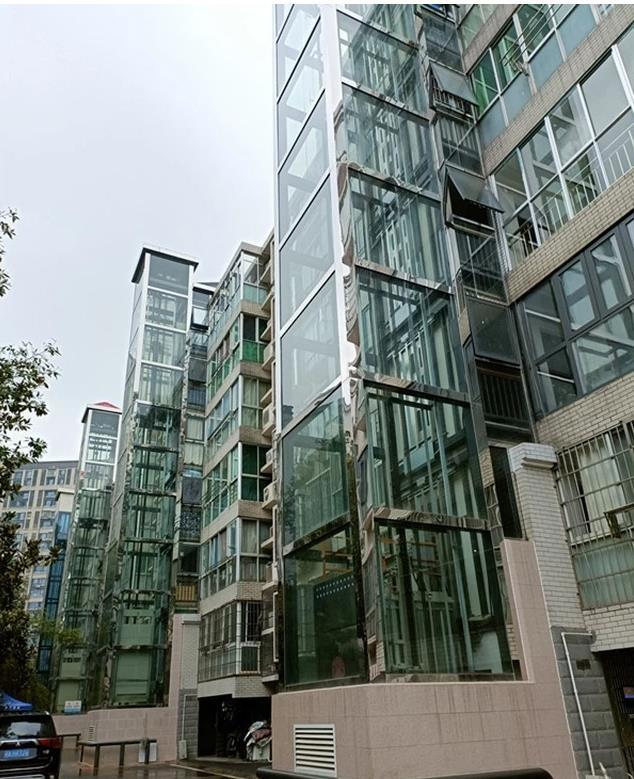
Recently, the Supreme People's Court and the Ministry of Housing and Urban-Rural Development jointly issued the first batch of typical cases of installing elevators in old communities.

The release of typical cases shows the rules for installing elevators in existing residential buildings in old residential areas from different angles, providing judicial and law enforcement guidance for people's courts and administrative departments, as well as behavioral guidance for community owners.
Text irrelevant

 
One is about the rules of installing elevators.The installation of elevators is an act of rebuilding or rebuilding a building and its ancillary facilities, and it is a matter that should be jointly decided by the owners. According to Article 278 of the Civil Code, the owners whose exclusive part area accounts for more than 2/3 and whose number accounts for more than 2/3 shall participate in the voting, and shall be approved by the owners whose exclusive part area is more than 3/4 and whose number of voting is more than 3/4. At the same time, the installation of elevators must obtain the approval procedures of the administrative department to ensure that the installation construction will not cause harm to the safety of the main structure of the house, and minimize the adverse effects on the ventilation, lighting, and passage of other owners. In the typical cases released this time, the owner's voting procedures and administrative examination and approval procedures required for the installation of elevators have been strictly controlled, requiring the installation of elevators in accordance with the law.
The second is about the rules to ensure the orderly construction of the elevator project.For the act of installing elevators in accordance with the law, the owners of the upper and lower floors of the same unit, the owners of adjacent units of the same building, and the owners of adjacent buildings in the same community shall respect and tolerate them, and shall not illegally obstruct the construction. If other owners obstruct the construction, the owner applying for the installation of elevators has the right to request the removal of the obstruction; if other owners obstruct the construction and cause losses, the construction unit and other victims have the right to request compensation for the losses.
Third, it is not allowed to illegally dismantle the rules of the elevator built in accordance with the law.For elevators that have been built in accordance with the law, the people's court will not support the owner who repents or opposes the installation of elevators and requests the removal of elevators. Even if the installation of elevators will affect the passage, ventilation and lighting of other owners, or occupy a small amount of public green space, other owners should be appropriately tolerant.
Four is the legal installation of the elevator use rules.At present, disputes over the installation of elevators in old residential areas are mainly concentrated in the installation stage. With the increase of installation of elevators and the increase of elevator running time, disputes over the use of elevators will also increase. On the one hand, owners who oppose the installation of elevators shall not hinder the reasonable use of the installation of elevators by other owners; on the other hand, owners who oppose the installation of elevators or who have not funded the installation of elevators need to use the installation of elevators due to the needs of their lives, they shall be protected in accordance with the law in the case of reasonable sharing of installation and maintenance costs.
Watch more news
 
With the profound changes in my country's population structure and the increasing demand of the people for a better life, the installation of elevators in existing residential buildings in old communities has become an urgent need for urban families, especially families with the elderly, infants, and the disabled.
As of October 2023, nearly 100000 elevators have been installed in existing residential buildings in old residential areas across the country, but the installation of elevators is still a difficult problem strongly reflected by the masses in the transformation of old residential areas.In the process of elevator installation and use, upstairs and downstairs, neighbors are prone to disputes due to different needs and interests. Properly resolving neighborhood disputes and providing a strong legal guarantee for the installation of elevators in existing residential buildings in old residential areas are related to the happiness and security of tens of thousands of families, the safety and convenience of "one old and one young" and the disabled, and the harmony and stability of the vast grass-roots community.
In recent years, the Supreme people's Court and the Ministry of Housing and Urban-Rural Development have worked together in many fields to promote pluralistic dispute resolution and form a joint force of the rule of law by jointly establishing a "general to general" online litigation docking mechanism, issuing and handling judicial suggestions. On November 8, the Supreme People's Court and the Ministry of Housing and Urban-Rural Development jointly issued the first batch of typical cases of installing elevators in old communities.
The typical cases of installing elevators in old residential areas released this time have the following characteristics:
 
1. Promote the spirit of the rule of law and highlight the rules of conduct
Article 288 of the Civil Code stipulates that the neighboring right holders of real estate shall correctly handle the neighboring relations in accordance with the principles of favorable production, convenient life, unity and mutual assistance, fairness and reasonableness. The Civil Code also makes clear provisions on the voting procedures for owners to decide to install elevators. Article 22 of the barrier free environment construction law, which came into effect on September 1, 2023, stipulates that the state supports the installation of elevators or other barrier free facilities in existing multi-storey residential buildings in old urban areas to provide convenience for the disabled and the elderly. House owners should carry forward the traditional virtues of the Chinese nation, such as being kind to their neighbors and helping each other, strengthen communication and consultation, and cooperate with existing multi-storey houses to install elevators or other barrier-free facilities in accordance with the law. The installation of elevators in the typical cases released this time has fulfilled the democratic decision-making procedures and completed the approval procedures for construction, which has made it clear that other owners shall not illegally obstruct the installation of elevators in accordance with the law. In the case of Xu mou and other six people v. fan mou to exclude nuisance disputes, the people's court made it clear that the owner of the elevator installation according to law has the right to request the owner of the adjacent building to stop obstructing the installation of elevators. In the case of Kang and others v. Liu and others excluding nuisance disputes, the people's court made it clear that if the installation of elevators in accordance with the law has little impact on other owners, other owners, other owners shall not obstructions, the people's court made it clear that if the owner illegally obstructs the installation of elevators and causes losses, he shall be liable for compensation in accordance with the law; in the case of Zhao v. Tang, Fan and other contract disputes, the people's court made it clear that disputes arising from the use of the installation of elevators by the owners should be handled through consultation according to the principle of facilitating production and life; in the case of tort liability dispute between Liu and an economic union, the people's court made it clear that if the owner has no sufficient evidence to prove that the elevator installed in accordance with the law affects its ventilation, lighting and passage, he has no right to request the removal of the elevator.
2. Promote diversified dispute resolution and strengthen the governance of litigation sources.
Many typical cases released this time are handled through mediation, resolving contradictions at the grass-roots level. In the case of Zhang and other eight people v. Li and Ren, the people's court, through mediation, urged the parties to optimize the construction process, arrange safety monitoring, dispel other owners' safety concerns about the installation of elevators, and resolve the hearts of the masses. In the case of ten people such as Su and Wu v. Chen, the people's court guided the parties through mediation to understand and give way to each other, good-neighborly and friendly, and effectively resolve the use disputes after the elevator installation; in the case of He Mou v. Wan Mou, the People's Court of Shangcheng District, Hangzhou City, Zhejiang Province, the District Housing and Urban-Rural Development Bureau and the District People's Mediation Committee jointly convened all parties to conduct joint mediation, interpret and answer questions from the professional perspective of law and construction, and promote owners Form a consensus on installing elevators and effectively resolve disputes.
3. Promote traditional virtues and promote community harmony
The many typical cases released this time reflect the traditional virtues of the Chinese nation that neighbors are the first and harmony is the most valuable, and promote the core socialist values of the rule of law, civilization, harmony and friendliness. For example, in the case of tort liability disputes such as Wang mou and dou mou v. Luo mou and yang mou, under the condition that the owner who advocated the installation of the elevator has won the case and completed the installation of the elevator, the party member owner living upstairs took the lead and took the initiative to find the owner on the second floor who opposed the installation of the elevator for negotiation. the owner on the second floor jointly contributed 7639 yuan to the elevator access corridor free of the owner, and exempted elevator maintenance fee for 10 years, the parties shook hands and made peace, and the neighborhood relations became more harmonious.
4. Linking autonomy and the rule of law, the realization of political and human rights
Neighborhood is a typical acquaintance relationship. Dealing with neighborhood disputes requires both the rule of law and autonomy. The essence of grass-roots social governance is to seek common ground and to achieve success through cooperation. When a residential area in Hangzhou, Zhejiang Province resolved the dispute over the installation of elevators, the local street office set up a hearing platform, invited all parties to participate in the hearing, let legal professionals interpret the law, let the people reason, let the rule of law and autonomy organically link up, enable the people to resolve the dispute on their own on the basis of full consultation, and urge the four-year ladder project to "break the ice". In many typical cases released this time, the resolution of disputes has benefited from the people's courts and government departments guiding the parties to resolve disputes through negotiation, resolving contradictions at the grassroots level, keeping disputes out of the streets, and achieving the effect of political and human rights.

Source: Jiangxi released comprehensive Jinyun, CCTV news client

If there is infringement, contact Li delete


Keywords:

AVIC Elevator Equipment, AVIC Elevator, Elevator Sales, AVIC Elevator Sales, Elevator Maintenance