

NEWS
NEWS
Don't object, starting from next year, all elevators will be installed on the 4th floor or above of the "new regulations" for residential buildings!
2024-05-14
author:
Page view:
Don't object, starting from next year, all elevators will be installed on the 4th floor or above of the "new regulations" for residential buildings!
Many people like to buy elevator room, don't like to buy stairs room, why?
The opinion given by the buyer is:
The elevator room will never have to climb the stairs. Except for very few special cases, the elevator has a great effect on the comfort of the home. However, some people objected that stairs are the standard configuration of buildings in the traditional sense. The necessary condition for elevators is electricity, which is easily affected by the "power failure" of the external environment. If you encounter a residential area with frequent power outages, the difficulty of climbing stairs can be imagined.
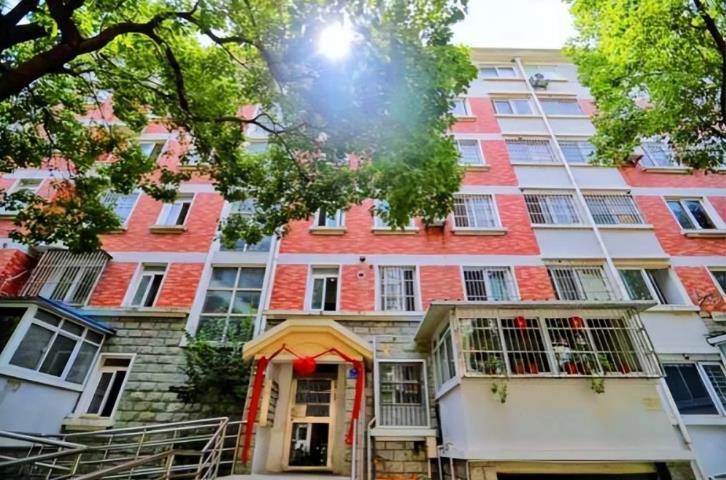
If you really want to make a comparison between the elevator room and the stair room, I think the elevator room is better than the stair room. From the perspective of social progress, thatched houses belong to the first generation of housing (including thatched houses, stone houses, etc.); brick houses belong to the second generation of housing (including concrete brick houses, urban multi-storey residential stair houses, etc.); High-rise elevator rooms belong to the third generation of residential buildings (mainly for 10-40 floors of elevator rooms).
In the past 20 years, the reason why elevator houses can basically completely replace stair houses and become the standard equipment of urbanized buildings is that they have successfully solved the problem of the contradiction between people and land. Although my country has a land area of more than 960 million square kilometers, after deducting the western plateau and mountainous areas and 1.8 billion mu of permanent farmland red line, after removing the vast rural collective land, the land area that can be used for urban construction land is actually very small, just like a city like Shenzhen, it developed from a small fishing village at the beginning. The expansion of urban land is slow, and it is surrounded by vast rural areas, but people continue to squeeze here. So in order to solve the problem of living, the construction of 40 layers of elevator room has become a wise choice.
But in terms of living comfort, the lower the house is from the ground, the higher the living comfort is, which is beyond doubt. This is also the main reason why the elderly at home all want to buy the first floor of the elevator room.
Stairs room "can't buy"? From next year, residential "new regulations" implementation, more than 4 floors all the elevator, there are 2 new changes to buy stairs room, is good news.
1, the newly built multi-storey staircase room, more than 4 floors, all need to install elevators.
According to the newly issued ''Residential Project Code'' by the Ministry of Housing and Urban-Rural Development, in order to gradually improve the design standards of urban buildings, in the future, houses with a height of more than 9 meters need to be equipped with corresponding elevators (9 meters from the ground, according to the height of 3 meters Calculated, that is, houses with more than 3 floors, starting from the 4th floor). Compared with the previous residential construction regulations, this requirement greatly improves the construction standard (the original distance from the ground reaches 16 meters, that is, when the total floor height reaches 7 floors, the elevator must be installed).
In this way, in the future construction of urban houses, there will be basically no houses without elevators. This new regulation is also vividly called the "stair-free house" system. Buildings with a total floor height of less than 3 floors are either homestead houses or villa houses. These two types of houses do not use elevator equipment at all; elevators are required for those with more than 4 floors, so all cities will be "elevator rooms".
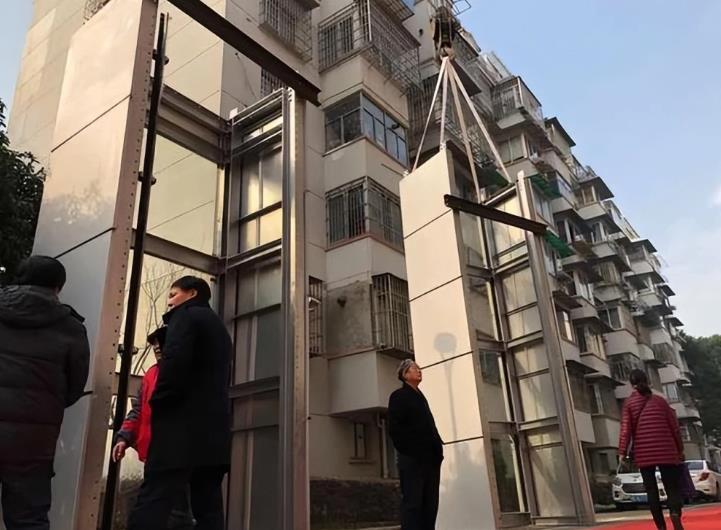
The old houses that have been built in the city will be equipped with elevators.
After solving the problem of installing elevators in new houses in the future, how to solve the problem of multi-storey residential stair houses that have been built and completed in the past 20 years? Does it continue to be "no elevator? The Ministry of Housing and Construction has also given a new plan. The Vice Minister of the Ministry of Housing and Construction said that" in the future urban development, we should avoid the way of demolition and large-scale demolition and construction ". The old reform will be put on the agenda from 2019, and the old reform project with a total investment of 4 trillion will be completed by 2025. Improve the quality of property for more than 0.1 billion people living in older homes.
However, the old reform also has certain difficulties, especially on the issue of adding elevators. The opinions of the residents on each floor are inconsistent. 100 percent of the residents on the top floor and the residents on the 5th floor agree to support the installation of elevators. The middle-level residents on the 3rd and 4th floors are wavering and want to install them but are not willing to bear more costs. Most of the low-rise residents on the 1st and 2nd floors are opposed. The addition of elevators precisely involves the interests of every household in the whole building, so according to the original regulations, every household needs to "agree", which means that every household has a "one-vote veto".
This has also led to the premature death, suspension and shelving of elevator installation in many residential areas. How can these new problems be satisfactorily solved? Many cities have explored new ideas, such as Shanghai, Beijing and other cities have introduced new regulations, abandoning the original "installation of elevators one-vote veto system, only the building 2/3 agree and others do not object to it." This proportion is designed very cleverly. The total height of multi-storey residential buildings is 6 floors, and each floor is mostly 2 households. If the 2 households on the first floor do not agree, then there is still 83.3 support rate, accounting for more than 2/3. Make a worst-case plan. The 4 households on the first and second floors do not agree, then the support rate is still 66.6, which just meets 2/3 proportion, and the installation of elevators can still be carried out. In this way, the first and second floors are not opposite.
So, will the staircase room become a hot potato in the future?
The author thinks it is possible that, on the one hand, people prefer a low and sparse living environment. Elevator rooms in high-rise buildings are often very depressed. Moreover, in high-volume residential areas, there are many people and things to do. The environment and quality of life of the residential areas are worse than those of low-density and lower-storey multi-storey residential buildings. Once the new elevator regulations are implemented, people may be more inclined to buy stair houses.
Source: Tencent News Client
If there is infringement, contact Li delete
Keywords:
AVIC Elevator Equipment, AVIC Elevator, Elevator Sales, AVIC Elevator Sales, Elevator Maintenance
Contact us

Address: Emei Mountain Road, Gaoping Industrial Park, Huichuan District, Zunyi City
Public account
Mobile terminal
Copyright © 2024 CHINA AVIATION GUIZHOU ELEVATOR CO.,LTD All Rights Reserved