

NEWS
NEWS
Intellectual Property Publicity Week to strengthen the protection of the rule of law in intellectual property rights, strong support for comprehensive innovation.
2024-05-14
author:
Page view:
Intellectual Property Publicity Week to strengthen the protection of the rule of law in intellectual property rights, strong support for comprehensive innovation.
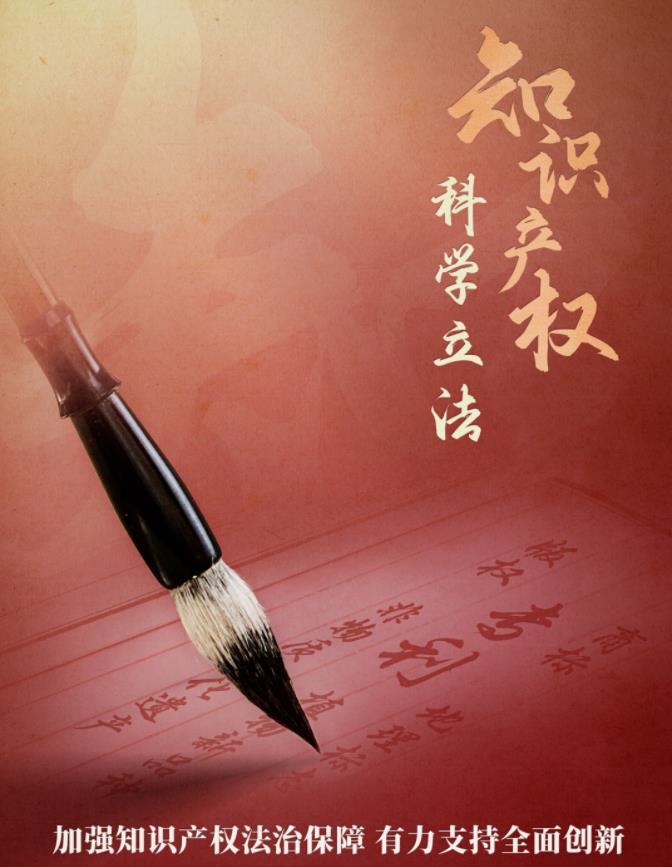
April 26, 2023 is the 23rd World Intellectual Property Day. The theme of this year's national intellectual property publicity week is "strengthening the legal protection of intellectual property rights and strongly supporting comprehensive innovation".
' fill='%23FFFFFF'%3E%3Crect x='249' y='126' width='1' height='1'%3E%3C/rect%3E%3C/g%3E%3C/g%3E%3C/svg%3E)
"Intellectual property" comes from legal provisions
Intellectual property is a certain period of social development. In order to stimulate innovation and promote the development of science and technology and other public policy needs, the state compulsorily sets all kinds of intellectual achievements as the legal rights of creators. Therefore, whether the results of people's intellectual activities can be recognized as intellectual property rights and protected can only be determined by the country's intellectual property laws.
What Intellectual Property Rights Include
Intellectual property rights include traditional intellectual property rights and new intellectual property rights. Traditional intellectual property rights can be roughly divided into copyright (Copyrights), patent rights (Patents), and trademark rights (Trademarks), of which patent rights and trademark rights are collectively referred to as industrial property rights (industrial right); new intellectual property rights include integrated circuit layout design rights, new plant variety rights, geographical indication rights and trade secret rights. With the acceleration of scientific and technological innovation and social development, the scope of intellectual property extension types will be wider and wider, and the expansion speed will be faster and faster.
What is Intellectual Property Protection?
Intellectual property rights protect intangible objects such as intellectual achievements and goodwill. The concept of "immateriality" is relatively unfamiliar to most people. The following case can help understand "immateriality": Zhao returned from a trip to South America and wrote a travel book "Traveling in South America". "A certain intellectual achievement" refers to the content in the book "Traveling in South America. Suppose "Traveling in South America" is released by the publishing house and sold out. Then, the ownership of the published book "Traveling in South America" has belonged to the purchaser respectively, but the copyright of "Traveling in South America" still belongs to Zhao only. If someone steals a book purchased by one of the readers, the act of stealing the book infringes on the ownership of the reader, but does not infringe Zhao's copyright, which is not the object of protection of the copyright law; however, if the person who steals the book also publishes the contents of the book on a travel website without authorization, it constitutes an infringement of Zhao's copyright, because the copyright law protects the contents written in the book "traveling in South America, without Zhao's own consent, others are not allowed to copy and spread the contents of the book.
Intellectual property rights should be "embodied" through tangible forms"
The "intellectual achievements, goodwill" and other objects of intellectual property protection are invisible and intangible. Therefore, these objects must be "embodied" in tangible form. Only when they are "fixed" in physical form can they become the protection objects of intellectual property law.
Intellectual property owners enjoy "exclusivity" of intellectual property rights"
The peculiarity of intellectual property is that in most cases it must be public. For example, someone invented a technology and successfully applied for a patent. Only when the patented technology is applied to the product and sold can it bring economic benefits to the patentee, and the better the product is sold, the more the patentee will benefit. However, the greater the market sales of the product, the greater the risk of being "pirated" in front of more people. If the law does not give the patentee the "exclusive ownership" of the patent in time, and others do not have to bear any legal consequences for misappropriation, then once other products also use the technology at will, the economic rights and interests of the patentee will not be guaranteed.
Therefore, whether it is copyright, patent right or trademark right, the core of their rights is "no one can use it without the permission of the right holder", which protects the exclusive rights and interests of intellectual property owners through the power of law.
Intellectual property has regional restrictions
Since the types of rights and protection provided for in the intellectual property laws of various countries are different (for example, scent trademarks recognized by the United States and other countries cannot be registered as trademarks in my country), unless there are special provisions in international treaties, bilateral or multilateral agreements, A country's intellectual property rights cannot be automatically protected in other countries.
Different types of intellectual property rights are acquired in different ways.
According to the current relevant laws and regulations of our country, the copyright is "obtained when the author's creation is completed", the patent right is "effective from the date of grant and announcement by the Patent Office", and the trademark right is "obtained from the approval and registration of the Trademark Office". As international practice is the same, different types of intellectual property rights are subject to different degrees of regional restrictions.
Most intellectual property rights are protected for a limited period of time.
Once intellectual property rights exceed the protection period stipulated by law and enter the public domain, they are no longer protected. People can use related works and technologies for free without the permission of the intellectual property owner. The relevant protection period of my country's current legislation is mainly: 50 years of copyright, 20 years of invention patents, 10 years of utility model patents and design patents, and 10 years of trademark validity. However, in the case of personal rights (author's right of authorship, etc.), the results of non-intellectual activities or non-public information (trade secrets, etc.), there is no time limit on the period of protection.
Source: State Intellectual Property Office, China Law Popularization
If there is infringement, contact Li delete
Keywords:
AVIC Elevator Equipment, AVIC Elevator, Elevator Sales, AVIC Elevator Sales, Elevator Maintenance
Contact us

Address: Emei Mountain Road, Gaoping Industrial Park, Huichuan District, Zunyi City
Public account
Mobile terminal
Copyright © 2024 CHINA AVIATION GUIZHOU ELEVATOR CO.,LTD All Rights Reserved