

NEWS
NEWS
"Beijing existing multi-storey residential installation elevator operation guidelines (Trial)" issued a clear old building installation elevator complete specification process
2024-05-14
author:
Page view:
"Beijing existing multi-storey residential installation elevator operation guidelines (Trial)" issued a clear old building installation elevator complete specification process
Original title: Clarify the full set of standard procedures for installing elevators in old buildings
Within the scope of Beijing, there are clear guidelines for starting the installation of elevators in old buildings-a legal majority of owners participate in the voting, and the confirmation of project construction application will be started with the consent of owners with an area of more than 3/4 of the exclusive part participating in the voting and with the consent of owners with a voting number of more than 3/4.
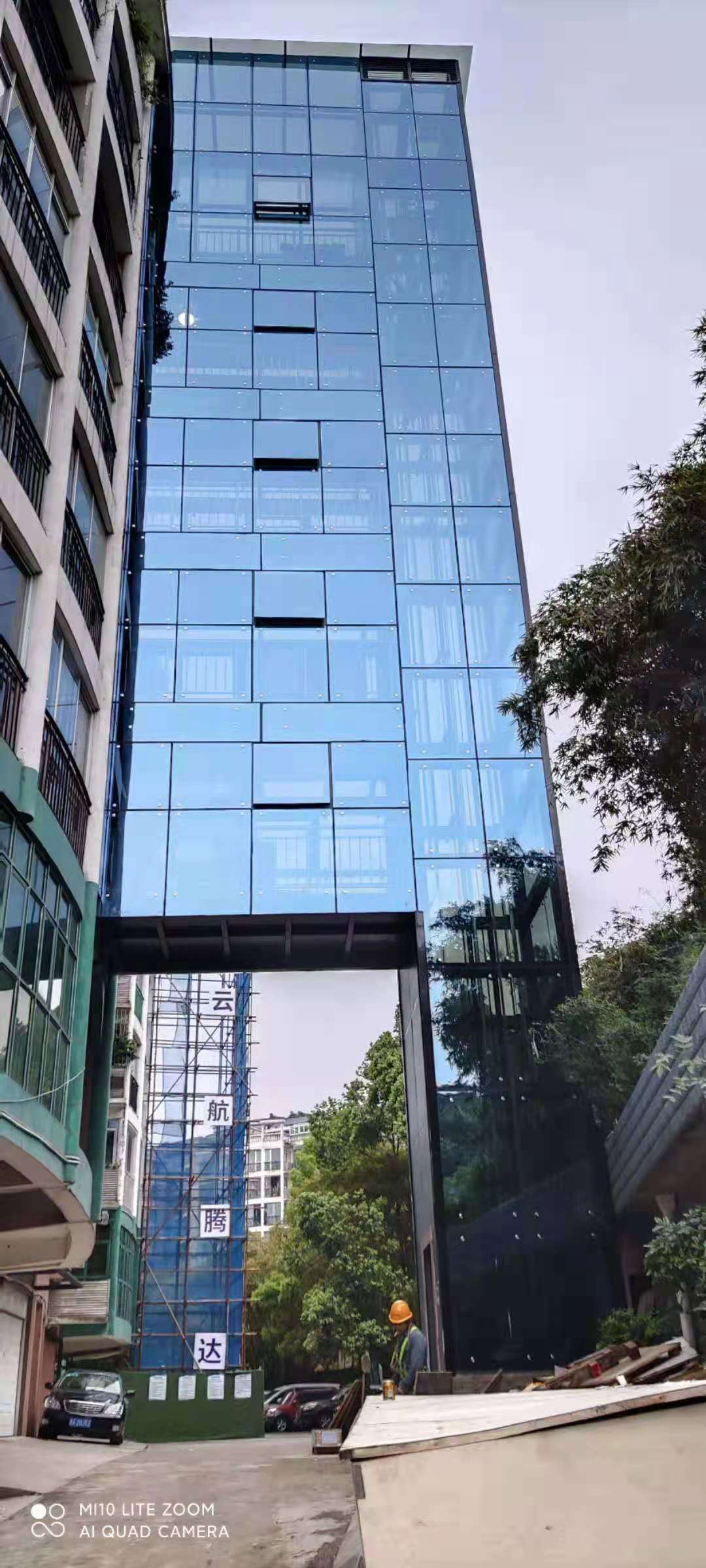
Text irrelevant
Recently, the Beijing Municipal Commission of Housing and Urban-Rural Development and other four departments have compiled and issued the "Operational Guidelines for the Installation of Elevators in Existing Multi-storey Residential Buildings in Beijing (Trial)" (hereinafter referred to as the "Operational Guidelines") to clarify the application and construction of elevators in old buildings., A full set of standardized procedures for operation and management.
According to the interpretation of the interviewed experts, the release of the "operation guidelines" provides a standardized application, construction and operation management process for the residents of the old community, and promotes the installation of elevators in the old community more reasonably and legally, so as to facilitate the residents of the old community to go up and down and travel.
There are standard guidelines for installing elevators.
Mr. Jiang, 67, is a resident of Chaoyang District, Beijing. His community was built in the 1990 s. The residential buildings are mainly slab buildings with six floors above ground and one floor below ground, without elevators.
Mr. Jiang had suffered from polio (polio), and the sequelae left behind included muscle atrophy in his right leg and right arm, which made him unable to exert his strength and belonged to the physically disabled. Although he lives on the second floor, it takes several minutes to go downstairs every time, because he has to hold the railing with his hand and move down step by step. For him, the biggest worry in life is the problem of going up and down the stairs, "if only there could be an elevator".
Mr. Jiang's expectations have become a reality in many old neighborhoods in Beijing. According to public information, since 2017, Beijing has vigorously promoted the installation of elevators in old buildings. As of the end of August this year, more than 3370 elevators have been installed.
Now, the promulgation of the "Operation Guidelines" means that Beijing has a guideline document issued by the government department to promote the installation of elevators in old buildings, and there is a full set of standardized procedures for the installation of elevators in old buildings from the time they are proposed to the ground. The "Operation Guidelines" clearly put forward the "three-way work method" for installing elevators in old buildings, I .e. one application will be started, the proportion will be confirmed, and the construction will be started upon consensus.
Sun Baiying, Secretary of the Party Committee of the School of Public Administration of Renmin University of China, believes that the release of the ''Operating Guidelines'' clearly stipulates the conditions and technical standards for installing elevators in existing multi-storey residential buildings in Beijing communities, which will have a positive impact on the installation of elevators in Beijing. On the one hand, the "Operation Guidelines" establish the standard process and technical standards for the installation of elevators, and specify the safety requirements for the supply of community public facilities; on the other hand, the installation of elevators can solve the problem of elderly residents going up and down, and improve the society of the elderly. Welfare and quality of life will help improve the infrastructure of the "old and small" community.
In her opinion, from the perspective of grass-roots public governance in megacities, the installation of elevators in "old and broken small" communities is a major public affair of urban renewal and facility renovation. The Operation Guidelines not only promote the installation of elevators and facility renovation, but also provide residents with a democratic consultation and discussion around the supply of quasi-public goods, reach a consensus, promote public participation and develop independent governance, thus, the platform and field of community cooperative collective action are produced.
Bi Wenqiang, vice president of the Beijing Property Law Research Association, believes that the "Operation Guidelines" can more reasonably and legally promote the installation of elevators in old communities, make the process of installing elevators in old buildings more standardized and the mechanism more formed, and solve the previous installation of elevators. The problems that occurred in the process make it easier for residents of old communities to go up and down the stairs.
"Especially for the elderly, there are certain difficulties in going up and down the stairs due to physical reasons, and the demand for elevators in old buildings is increasing. Therefore, there is a strong demand for elevators, whether from a safety point of view, improving the quality of life of the elderly or improving the quality of living in the city." Bi Wenqiang said.
One owner can improve the installation demand
The first step in the implementation process of installing elevators is to put forward requirements.
The "Operation Guidelines" clarify that the unit (collective) or owner puts forward the need to install elevators to the street (township) or community (village) where the house is located. If the relevant units have the conditions for installing elevators, the streets (villages and towns) and communities (villages) shall start the work of consulting the wishes of the relevant owners, so that the work of consulting the wishes of one household shall be started upon application.
Bi Wenqiang explained that the "Operation Guidelines" clarified the application criteria, and one owner can apply, which essentially optimizes the process. On the whole, the Operational Guidelines greatly simplify the complex application and approval process of the past.
The second step in the implementation process of installing elevators is to organize consultations, that is, the residents committee (village committee) guides and supervises the owner organization (industry committee or property management committee) to organize the owners to vote. The proportion of owners' consent reaches the proportion stipulated in Article 278 of the Civil Code. Owners with more than 2/3 of the exclusive part area and more than 2/3 of the number of owners participate in the voting. With the consent of owners with more than 3/4 of the exclusive part area and more than 3/4 of the owners participating in the voting, the confirmation of project construction application will be started.
"The" Operating Guidelines "clarified that the main body that organizes the owners' voting is the community residents' committee or villagers' committee, and clarified the voting ratio and legal basis for installing elevators." Bi Wenqiang said.
According to the provisions of the Civil Code, although the installation of elevators only requires the consent of the legal majority of owners, it cannot ignore the 1. second-floor owners whose interests are damaged by the installation of elevators, so as not to affect the harmony of the neighborhood.
For this reason, the "Operation Guidelines" clearly state that owners benefiting from the installation of elevators can adopt appropriate methods to give appropriate compensation to the owners on the second floor of the 1.. These appropriate compensation methods include: on the basis of the joint decision of the owners organized by the industry committee (property management committee), the owners on the lower floor can give priority to the selection of parking spaces; When installing elevators, if the owners on the lower floor need for local indoor renovation, the implementation, the implementation and construction can help, and may grant relevant fee waivers, etc.
According to Bi Wenqiang, the "Operation Guidelines" strengthened the supervision of the installation of elevators in old buildings, including construction quality, safe operation, etc., to ensure the safety of elevators; allowing the introduction of third-party organizations for construction and operation management, breaking the past Only the mode of management by government departments, etc.
In his view, these institutional arrangements made in the "Operational Guidelines" constitute a normative document to promote practical operation, which is conducive to the implementation of the installation of elevators.
Give full play to the enthusiasm and initiative of residents
The reporter combed and found that it is not only Beijing that has issued documents similar to the "Operation Guidelines". In recent years, Guangzhou, Shanghai and other places have issued guidelines for installing elevators.
In March 2020, the relevant departments of Guangzhou prepared and issued the "Guidelines for the Installation of Elevators in Old Residential Areas in Guangzhou" to strengthen the technical guidance on the standardized design, installation, quality and safety of elevators in old residential areas in the city.
In addition, some cities have issued special regulations on the installation of elevators. For example, in June 2020, the General Office of the Guangzhou Municipal Government issued the "Measures for the Addition of Elevators to Existing Residential Buildings in Guangzhou"; in July 2022, the Office of the Sanming Municipal Government of Fujian Province issued the "Implementation Measures for the Addition of Elevators to Existing Residential Buildings in Sanming (Revised)" In September this year, the General Office of the Chongqing Municipal Government issued the "Administrative Measures for the Addition of Elevators to Existing Residential Buildings in Chongqing"...
Bi Wenqiang believes that the background for such measures is that as urbanization reaches a certain level, urban renewal will become a key task for a period of time. Therefore, all localities carry out urban renewal in accordance with the law, including actively promoting the transformation and upgrading of old residential areas, and improving the infrastructure of residential areas by installing elevators, so as to improve the quality of life of urban residents.
"Some places have issued guidelines for the installation of elevators, clarifying the procedures for installing elevators, fund-raising methods, safety management and other regulations, which can provide reference for other places to formulate relevant policies." Bi Wenqiang said: in particular, promoting the installation of elevators in old residential areas by means of local legislation can not only provide a clear legal basis for the installation of elevators, but also formulate regulations that are more in line with local needs according to local actual conditions.
However, in the view of some interviewed experts, the installation of elevators is an autonomous and autonomous matter of community residents, and should not be excessively elevated to the statutory responsibility of the government.
"It should be noted that the installation of elevators in existing multi-storey residential buildings is the business of community residents and owners, not the responsibility of the grass-roots government. It is a good thing to promote the installation of elevators, but the financial affordability should be considered. At the same time, the installation of elevators should not be turned into an assessment index for the grass-roots government." Li Ling, a professor at the School of Applied Science and Technology of Beijing Union University, reminded that the installation of elevators is a matter of residents' autonomy. It cannot be "one size fits all" and pushed away by administrative orders. Instead, the enthusiasm, initiative and autonomy of community residents and villagers should be respected.
Li Ling believes that in the process of installing elevators, the government should ensure the open, reasonable, and compliant use of the financial funds invested, and at the same time do a good job in elevator acceptance, check the elevator acceptance, and effectively guarantee the quality of installing elevators.
In Sun Baiying's view, the government is only an advocate and promoter of improving the infrastructure of the community, rather than a direct provider of elevator goods. Local governments can provide advocacy "operational guidelines" to guide community residents to negotiate on the installation of elevators. At the same time, it also advocates multi-subject and diversified joint production mechanisms such as individual residents, market, enterprises and social organizations, and multi-channel financing channels, innovate the supply mode of community facilities such as elevators. (Chen Lei)
Source: Rule of Law Daily
If there is infringement, contact Li delete
Keywords:
AVIC Elevator Equipment, AVIC Elevator, Elevator Sales, AVIC Elevator Sales, Elevator Maintenance
Contact us

Address: Emei Mountain Road, Gaoping Industrial Park, Huichuan District, Zunyi City
Public account
Mobile terminal
Copyright © 2024 CHINA AVIATION GUIZHOU ELEVATOR CO.,LTD All Rights Reserved