

NEWS
NEWS
Who should "give way" to the dispute over the installation of elevators "?
2024-05-14
author:
Page view:
Who should "give way" to the dispute over the installation of elevators "?
In recent years, many old community residential buildings have chosen to install elevators. However, in the process of installing elevators, disputes between high-rise owners and low-rise owners continue. Judging from the disputes over the installation of elevators heard by the Tianhe District Court of Guangzhou in the past five years, the aging characteristics of the parties are obvious; the owners' demands are mainly for tort damages, and 75% of the demands are supported by the court. The court suggested that if the real estate right holder uses the adjacent real estate, he should try his best to avoid causing damage to the adjacent real estate right holder; if the damage is caused, compensation should be made.
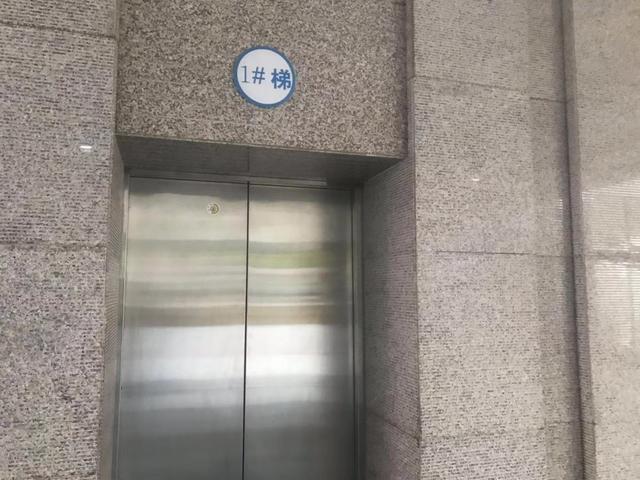
In recent years, the total number of approvals and completions for the installation of elevators in Guangzhou has steadily ranked first among major cities in the country. This livelihood project has benefited more than 700000 residents. However, in the process of installing elevators, disputes between high-rise owners and low-rise owners continue. This is what a reporter from the Workers' Daily recently learned from the Guangdong Provincial higher people's Court. Among them, the Tianhe District People's Court of Guangzhou City issued several disputes over the installation of elevators in the "Tianfa Observation of the installation of elevators", which is enlightening.
Case 1: Conditional demolition of air conditioning should give way
The building involved in a university was equipped with elevators, and the construction could not continue because the owner of the 401 room, Huang mou, did not move the outdoor air conditioner. Zhang and other 24 people filed a lawsuit to the court. The court held that the construction of the elevator project in the building involved was a legal act, and the defendant's external air-conditioning mainframe had other locations to install after it was removed. The court ruled that the defendant Huang removed the stainless steel guardrail and external air conditioner on the west side of the balcony of room 401 of the building involved. The Guangzhou Intermediate Court upheld the original verdict.
The judge said that the absolute freedom of the possessor of real estate to exercise his rights would be likely to cause conflict. The legal system of real estate adjacent relations adjusts the interests of all parties in adjacent real estate. In this case, the installation of elevators in the buildings involved will bring great convenience to the owners of the buildings involved, including the defendant, to go up and down the stairs; and the defendant's 401 room is not on the low floor, and the defendant himself is also over 70 years old. The court made the above judgment.
Case 2: The fence is not personal property rights can be removed and then built.
Li mou and other 13 people, the high-rise owner of a building, sued he mou and other 4 people, the low-rise owner, to the court, demanding that the defendant dismantle the walls of the gardens on both sides of the aisle of the first floor and cooperate with the construction of installing elevators. The Tianhe Court found that the enclosure was state property and that a college belonging to the building involved agreed to demolish the wall and restore the elevator after it was built. The court ruled that the defendant stopped obstructing the installation of elevators and cooperated with the demolition of the walls of the courtyard on both sides of the staircase aisle on the first floor. The Guangzhou Intermediate Court upheld the original verdict.
The judge said: Property right refers to the right holder in accordance with the law to have direct control and exclusive rights to a particular thing. In this case, the real estate certificate of the building involved indicates that all the land (including the fence) outside the scope of the real estate is still state property, so the owner cannot claim private rights to the fence only on the basis of long-term living habits, and it is even more illegal to hinder the installation of elevators on this ground.
Case 3: Ventilation and daylighting damage owners get compensation
The owner of the 103 house once had many contradictions with the owners of the 703 house who applied for the installation of elevators. Zeng sued the court and asked the defendant (the owner of the 703 house) and the third person who used the elevator (other owners from the first floor to the eighth floor) to build a closed wall on the east side of the elevator and the exit of the 103 house, and pay the loss of 150000 yuan for the installation of elevators (including the loss of falling house prices in 103 rooms due to the installation of elevators, the loss of Zeng due to the impact of lighting and ventilation, the treatment fee and mental loss fee for Zeng due to the installation of elevators).
After actual investigation, Tianhe Court held that the right holder who installed and used the elevator should give the plaintiff appropriate compensation for the installation of the elevator, and the appropriate amount of compensation should be 35000 yuan. The plaintiff did not provide sufficient evidence for the loss of the value of the 103 room and the physical discomfort caused by the installation of the elevator, and the court did not support it. With regard to the plaintiff's application for additional walls, the court comprehensively considered that building walls there was not conducive to getting in and out of the stairwell, nor was it conducive to fire escape, and at the same time, it would have a certain impact on the ventilation and lighting of the stairwell on the first floor, which was not allowed in accordance with the law.
The judge said: According to Article 92 of the Property Law, real estate rights holders who use adjacent real estate for water, drainage, passage, laying pipelines, etc., should try to avoid causing damage to adjacent real estate rights holders; if damage is caused, compensation should be given. That is, if the installation of elevators causes damage to the ventilation, lighting, quiet and other interests of other owners, the profit-making owners should compensate, and the damaged owners have the obligation to provide convenience within the necessary tolerance. In addition, in the balance of rights in the installation of elevator disputes, when the survival interests and property interests conflict, the survival interests of most people such as accident escape take precedence over the interests of individual property. Therefore, the plaintiff's request for wall building is not allowed.
Case 4: Cost-sharing increases can be used after the amount is replenished.
The cost of installing elevators increased, and Zheng's share of the cost increased from more than 30000 yuan to nearly 50000 yuan. Zheng did not agree. After the elevator was built, the main person in charge of installing the elevator refused to provide Zheng with an elevator access card on the grounds that Zheng did not pay the shared fee. Zheng took the two main persons in charge to court, asking the two defendants to stop obstructing the plaintiff's use of the elevator and assist the plaintiff in handling the elevator access card. The Tianhe Court ruled that the plaintiff's claim was rejected. None of the parties in the case filed an appeal, and the judgment has entered into force.
The judge said: the additional elevator is funded by the joint construction, which belongs to the exclusive real right shared within the scope of the investor, and the residents of the same building who have not contributed do not enjoy the right to use it free of charge. After the additional elevator is put into use, the owner who requires to enjoy the results of the additional elevator should actively negotiate with other owners, obtain the consent of other owners and pay the corresponding fees, and other owners should also actively cooperate and allow others to pay the corresponding fees. Use the elevator normally.
Observe 75% of claims for tort damages supported
According to the Tianhe Court issued by the "Tianfa Observation of the installation of elevator disputes", the installation of elevator disputes show three major characteristics. First of all, the installation of elevators involves the rights and interests of the owners of the whole building, with many stakeholders. In the past five years, Guangzhou Tianhe Court has heard 16 cases of disputes over the installation of elevators, of which 68% involved more than 30 parties.
Secondly, the owners mainly demand compensation for infringement damages, and 75% of the claims are supported by the court. The demands of the parties involved in the installation of elevators mainly include: stop the implementation of the act of obstructing the installation of elevators, compensate for the losses caused by the infringement of the installation of elevators, and compensate for the losses caused by the installation of elevators to the low-rise owners in ventilation, lighting, noise, and house depreciation.
In addition, it is urgent for the elderly to install elevators to improve their living conditions. Since 2015, Tianhe Court has heard 415 parties involved in disputes over the installation of elevators, with parties over 50 accounting for 90%.
The judge suggested that the decision to rebuild and rebuild the building and its ancillary facilities should be approved by the owners whose exclusive part accounts for more than 2/3 of the total area of the building and more than 2/3 of the total number of owners. If the right holder of real estate makes use of the adjacent real estate, he shall try his best to avoid causing damage to the right holder of the adjacent real estate; if any damage is caused, compensation shall be made.
Source:Workers' Daily, China News Network
Article website:http://www.chinanews.com/sh/2020/04-16/9158407.shtml
If there is infringement contact, delete it.
Keywords:
AVIC Elevator Equipment, AVIC Elevator, Elevator Sales, AVIC Elevator Sales, Elevator Maintenance
Contact us

Address: Emei Mountain Road, Gaoping Industrial Park, Huichuan District, Zunyi City
Public account
Mobile terminal
Copyright © 2024 CHINA AVIATION GUIZHOU ELEVATOR CO.,LTD All Rights Reserved