

NEWS
NEWS
How can we tide over the difficulties when elevators are installed in old residential areas?
2024-05-14
author:
Page view:
How can we tide over the difficulties when elevators are installed in old residential areas?
At present, the expansion of domestic demand is highly valued, but where is the greatest potential for effective domestic demand? It is the old community. Recently, the renovation of old residential areas has accelerated significantly. The Ministry of Housing and Construction has made it clear that 39000 old residential areas will be renovated in 2020, double that of 2019. The problem is that since the state proposed the renovation of old residential areas in 2015, the progress of this livelihood project has been very slow, and only 40000 residential areas have been renovated from 2015 to 2019. The main reason is that the debt of the infrastructure of the old community is too large, the income level of households is generally not high, the degree of aging is heavy, there are many trivial things, the interest relationship is intertwined, social capital is unwilling to enter, and the financial resources are unable to afford and cover the bottom.
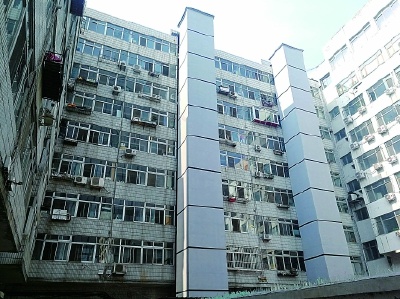
The author believes that in addition to the "shortcomings" of infrastructure such as hydropower and gas pipeline networks, whether the installation of elevators can be promoted will be the starting point for opening up all links of the transformation. An elevator can activate the value of a building. Not only is it convenient for the elderly to go up and down the stairs, but the demand for changing houses, leasing and decoration will follow one after another. This in turn will force community public services to open up the "last mile". Pension, child care, cultural rooms, medical care, disability assistance, housekeeping, express delivery, convenience stores, etc. have the foundation of demand, this will bring back to life a community that has fallen into a cycle of neglect and decay. However, the installation of elevators is precisely the most difficult bone in the transformation of old residential areas.
Everyone thinks that this is a good policy to install elevators, but it is very difficult to push forward. It takes 1-2 years for many projects to do the owner's work, and there are often cases where the owner repents and "does not agree to death. The reason lies in the interest game between the low floor and the high floor. The impact of installing elevators on a building is essentially a change in the price system between floors. Before the elevator was installed, compared with the 3-6 floors, although the lighting and ventilation of the 1-2 floors were not good, the pain of climbing stairs was avoided. Reflected in the house price, the house price on the 1-2 floor is not much lower than that on the 3-6 floor. However, after becoming an elevator room, the building's housing price system has completely changed.
For the 5-6 floors, not only the top floor has good ventilation and lighting, but also it has become an "elevator room", from the most unpopular floor to a hot cake. Naturally, the owners of the 5th and 6th floors are staunch supporters of the installation of elevators. They only wrangle over the specific cost bearing ratio and will definitely compromise in the end. The owners of the 3rd and 4th floors are ambiguous. Before installing the elevator, the 3-4 floor was a good floor, which had the advantages of ventilation and lighting, and climbing the stairs was not very tiring. After installing the elevator, the 3-4 floor may not be the best floor. But at the same time, the 3-4 floors can also enjoy the bonus of the "elevator room", and the money is not much compared to the 5-6 floors.
Therefore, when the street and neighborhood committees do their work, they often concentrate their efforts on winning the owners of the 3rd and 4th floors to dispel their idea of "riding on the wall. In this way, when the elevator is installed for advice, the power of the agreeing party is strong. For the owners of the 1st-2nd floor, in addition to worrying that the elevator will affect the lighting, ventilation, noise, and they will suffer a big loss, they feel that the cheap is taken up by the 3rd-6th floor, and they can't get any benefits of the "elevator room. On the contrary, after installing the elevator, the 1-2 floor became the worst floor. Before installing the elevator, if someone is willing to buy the house in this building, the 1-2 floor is still a relatively good choice, but after installing the elevator, it is estimated that the 1-2 floor will be difficult to get buyers and tenants to visit, and it is not good to live, rent and sell.
Therefore, it is not surprising why most of the owners of the 1-2 floor "do not agree with death". At present, there are 170000 old residential areas to be renovated in the country, with a total of 250-3 million elevators to be installed. According to data from the Ministry of Housing and Urban-Rural Development, in 2018, more than 10000 elevators have been installed in old communities across the country, more than 4000 are under construction, and more than 7000 are undergoing preliminary procedures. The completion rate is less than 1%, which shows how difficult it is. The author believes that only when the interests of the whole building are integrated together, the problem of installing elevators can be more easily promoted. In addition to sincere negotiation and mutual running-in, benefit compensation is the key.
According to the author's research, many of those who live on the 1st and 2nd floors for a long time are retirees and laid-off workers. Although they own homes, they don't share much of the dividends of property development and urbanization. On the contrary, in the past, real estate development took the evolutionary path of incremental expansion, new area development, and stock demolition (shed reform). The old community is the last to be seen, not only the serious lack of public facilities, serious aging, the situation inside the house is also deteriorating. Therefore, the author believes that the transformation of old communities is not only to expand domestic demand, but also to allow the people living in them to share the dividends of urbanization and real estate. Therefore, for the 1-2 floor of the demand, more should be in the form of economic compensation to meet. In this way, it can not only smoothly promote the transformation of the entire community, but also promote the revival of the entire community. The decoration and circulation of stock houses, economic accounts, or welfare accounts, are all cost-effective.
Source:Securities Times(The author is the chief researcher of Guangdong Housing Policy Research Center)
Article website:https://tech.sina.com.cn/roll/2020-04-28/doc-iircuyvi0239043.shtml
If there is infringement contact, delete it.
Keywords:
AVIC Elevator Equipment, AVIC Elevator, Elevator Sales, AVIC Elevator Sales, Elevator Maintenance
Contact us

Address: Emei Mountain Road, Gaoping Industrial Park, Huichuan District, Zunyi City
Public account
Mobile terminal
Copyright © 2024 CHINA AVIATION GUIZHOU ELEVATOR CO.,LTD All Rights Reserved