

NEWS
NEWS
The elevator is out of control and falling rapidly. Can people save themselves by jumping before landing? Why?
2024-05-14
author:
Page view:
The elevator is out of control and falling rapidly. Can people save themselves by jumping before landing? Why?
On the surface, it seems like a good idea to jump when the elevator is out of control and going down at speed, and that's what I think. But when I asked a friend who installed the elevator, I realized how naive this idea is.
First of all, the elevator has a protection system.
The reason why we have the objective impression that the elevator fails and falls rapidly is that such a bridge will appear in many film and television works. However, the film and television works are only to present us with exciting scenes. In fact, even if the elevator suddenly breaks down, we will not follow the elevator to the bottom and then fall to death. This is because the elevator has three layers of accident protection.
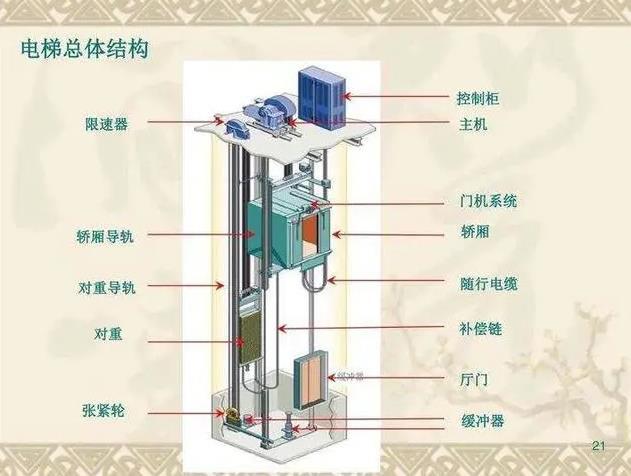
The first layer is the speed limiter. Each elevator has a speed limiter, which ensures that the elevator runs according to pre-set parameters, mainly speed. Under normal circumstances, the speed limiter and the running speed of the elevator are synchronized. When the running speed of the elevator is too high, the safety protection device of the speed limiter will work.
When the safety gear works, the elevator will be clamped on the guide rail, so that the elevator will be stuck in the middle and will not fall. Safety gear is divided into one-way and two-way two categories, in our country is the most common one-way safety gear.

The second floor is the elevator brake brake. There is usually an electromagnetic holding brake at the rear of the elevator motor. I don't quite understand the specific principle. Simply put, the operation of the elevator is controlled by the motor. When the elevator is out of control, the motor may stop working (accidental power failure or something). The electromagnetic holding brake will brake the motor under the reaction force of the spring, so as to achieve the braking effect.

Finally, the buffer device. If the first two protective devices fail, the elevator will indeed fall out of control. However, in order to prevent accidents, there will be a large hydraulic buffer at the bottom of the elevator. This device is equivalent to putting a large inflatable cushion on the ground when firefighters rescue people who jump off a building to suicide. It is the last very effective means of protection.
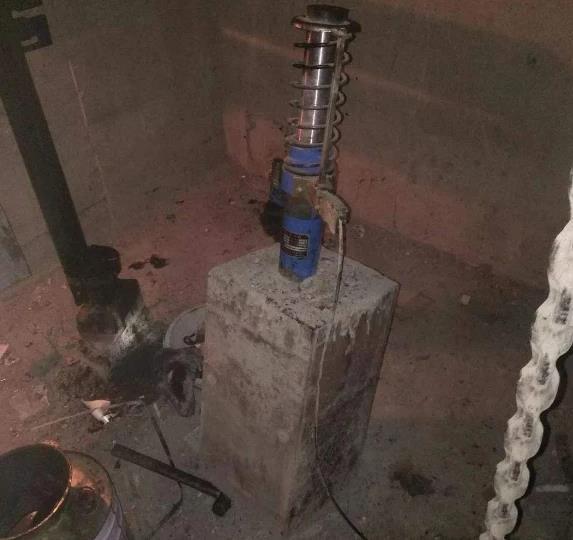
With these three layers of protection, even if the elevator fails, there is no need for people to jump before landing, because the first layer of protection can make the elevator stuck in one position, the second layer of protection can make the elevator hover in a certain position, and the third layer of protection can protect people from being hurt as much as possible when falling. Therefore, jumping up before landing can only exist in assumptions.
Assuming that the elevator is out of control and falling at a high speed, will people be saved by jumping a moment before they reach the ground?
It is not a simple thing for a person to jump up in an elevator that falls out of control, because the fall of the elevator only happens in a few seconds, and at this time, the person has to calculate the speed of the elevator falling and the height of the floor where it is located. Only in this way can you make sure that you jump up the moment before landing. Once the calculation is wrong, the person jumps up and the elevator is still falling, and the person's head may collide with the top of the elevator, thus causing danger.
If you jump late, there is no difference between jumping and not jumping, because some young men abroad have done experiments, using a tin box to simulate the elevator, putting a dummy inside, lifting the box with a crane and throwing it down without any protection on the ground, the sole of the dummy's foot is connected with a spring device, and the young man tries to bounce the dummy when the box falls to the ground with a remote control not far away. The results show that, the dummy's feet were still broken.
In the above experiment, people can still accurately observe the falling of the "elevator" outside, and they still bounce up after landing, not to mention judging the distance between the elevator and the ground inside the elevator. Considering that early jumping will cause greater damage (head impact), late jumping is the same as not jumping, and there is a buffer device at the bottom of the elevator, it is recommended not to think about when it is better to jump in this situation.
So, if a person jumps up just before landing, can he save himself?
The answer is yes, because as long as a person jumps up before landing, his head will not reach the top of the elevator, and when he falls again, the speed is very slow and the distance is very small, which is not much different from when we jump up and land on the flat ground. However, this method has a difficulty, because the higher the height of the fall, the faster the speed when landing.
When a person and the elevator fall together, the person wants to get rid of the elevator and needs a very large reaction force so that he can jump up. But in theory, man is impossible.
What if the elevator is out of control?
According to statistics, nearly 30 people die in elevator accidents every year in the United States, but these people are caused by improper operation after elevator failure. So, what can be done to reduce the damage?
First of all, to be calm, calm way is to know that the elevator has multiple protection systems, they will not die, so that people calm down.
Secondly, throw away the heavy objects on the back of the body, because it has happened that the same elevator is out of control and the person with the heavy object has a broken leg (other people are normal). This is because the weight will increase the pressure on the person's leg bones, so When facing the same impact force, the bones are more likely to be injured.
Third, fix the body against the wall. Elevators have handrails, and people can grab the handrail close to the side of the elevator, so as to prevent people from falling when the elevator is out of control.
Fourth: Don't try to open the elevator door, call the police for help in time. After the elevator has an accident, it is the first choice for people to open the elevator door to escape. However, it is necessary to know that the elevator failure may be stuck in the middle of the floor or may be suspended in the air. If it is opened rashly, it is easy to fall.
Summary
The elevator fails and falls at a high speed. People jump before landing. If the timing is very close to the ground and there is enough force, it is possible to save themselves. But in fact, this timing is even lower than the chance of winning the first prize in the lottery. If you jump early, you may get the lunch box in advance.
Therefore, in case the elevator is out of control, you should fix your body and believe that the protection system of the elevator (there is a hydraulic buffer at the bottom) can protect yourself. Finally, when you land, you should take the time to call the police for help.
Article source: Tencent network
If there is infringement, contact Li delete
Keywords:
AVIC Elevator Equipment, AVIC Elevator, Elevator Sales, AVIC Elevator Sales, Elevator Maintenance
Contact us

Address: Emei Mountain Road, Gaoping Industrial Park, Huichuan District, Zunyi City
Public account
Mobile terminal
Copyright © 2024 CHINA AVIATION GUIZHOU ELEVATOR CO.,LTD All Rights Reserved