

NEWS
NEWS
What is the difficulty of installing elevators in old residential areas?
2024-05-14
author:
Page view:
What is the difficulty of installing elevators in old residential areas?
"Installation of elevators" has been written into the government work report for many years.
What is the difficulty of installing elevators in old residential areas?
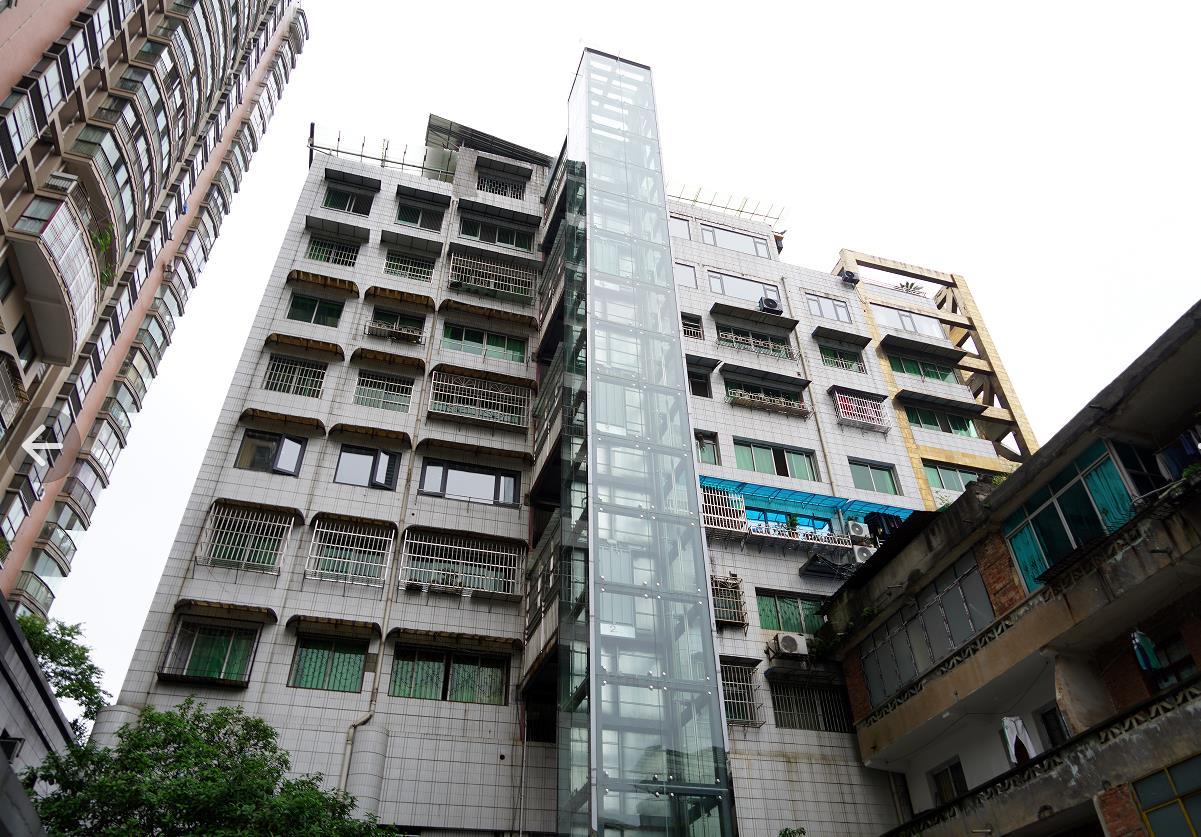
The installation of elevators in old residential areas is a livelihood project of great concern to the society, which is of great significance to improve the use function of housing, promote the construction of barrier-free environment, adapt to the needs of an aging society, and improve the quality of urban life.
This year, the Standing Committee of the National People's Congress will be the old community to install the elevator on behalf of the proposal identified as a key supervision recommendations.
At present, although the installation of elevators in old communities has achieved positive results, due to insufficient legal protection and differences in understanding of legal regulations such as the Civil Code, there are still many problems that need to be solved urgently.
Text irrelevant
All localities promote the installation of elevators
According to news from the Ministry of Housing and Urban-Rural Development, in July 2019, there were 170000 old urban communities to be renovated in my country, involving hundreds of millions of residents. There are also surveys showing that among the 170000 old communities across the country, they were mainly built between the 1960 s and 1990 s. These residential buildings due to low construction standards, a total of nearly 2 million units without elevators.
In a large number of old communities, many of them are elderly people. For them, going upstairs and downstairs has become a "big trouble", they can only reduce going out, and even do not go downstairs all the year round, becoming "hanging old people". With the increasing aging of the population, the installation of elevators in old communities has become a hot issue of widespread concern in the society, and the demands of residents have become increasingly strong.
The Party Central Committee and the State Council attach great importance to the work of installing elevators and have made arrangements for many times. In 2018, 2019 and 2020, the "Government Work Report" for three consecutive years mentioned the renovation of elevators in old residential areas. The 2022 Government Work Report proposes to start the renovation of a number of old urban communities and support the installation of elevators and other facilities.
This work has been actively promoted everywhere. Since 2018, the number of elevators installed in existing residential buildings nationwide has increased by an average annual rate of 60%.
Lu Shiming, a representative of the National People's Congress, a member of the Standing Committee of the National People's Congress, and vice chairman of the China Disabled Persons' Federation, once conducted a special investigation on the installation of elevators in old communities. "From the perspective of research, all departments and regions have conscientiously implemented the decisions and deployments of the Party Central Committee and the State Council, actively promoted the installation of elevators in existing residential buildings, and achieved positive results."
According to Lu Shiming, on the one hand, the relevant working mechanism has been effectively established. Many localities have established a working mechanism of government coordination and block coordination, and relevant departments, water, electricity, heat letters and other pipeline units have jointly promoted the work of adding ladders. At the same time, the policy system has been gradually improved. All localities have greatly simplified and optimized the approval procedures for project establishment, land use, planning, bidding, construction permits, and quality and safety supervision. Where conditions permit, financial subsidies will also be given to the installation of elevators, allowing residents to withdraw housing provident funds and use special residential maintenance funds for the installation of elevators.
The opinions of the owners are difficult to unify into resistance.
Although various departments have done a lot of work, there is still a big gap between the number of elevators successfully installed each year and the urgent needs of the masses. Based on the implementation of "installing elevators in qualified existing residential buildings" in more than 30 key cities across the country in the past two years, more than 90% of the cities have encountered resistance to installing elevators.
"From the survey, the direct reason why the number of elevators installed is not as expected is that it is difficult for residents on high and low floors to reach an agreement." Lu Shiming said.
In practice, for the installation of elevators in old residential areas, there is a big difference in the needs of residents upstairs and downstairs, with high wishes of owners on high floors and low wishes of owners on low floors, so it is difficult to unify the opinions of owners. How to get 100 percent of residents to agree or at least not explicitly oppose has become the "No. 1" problem in the installation of elevators in old residential areas across the country. The installation of elevators often falls into the strange circle of "one vote veto", and even some residential areas are difficult to unify the opinions of the owners, and finally the two sides go to court.
Among the top ten cases of the People's Court in 2021, the case of installing elevators in old neighborhoods is among them. In this case, the owner of the first floor of a residential area obstructed the construction of the elevator on the grounds that the installation of elevators affected the lighting of the house and there were potential safety hazards. Owners on the third floor and above will sue the first floor owners to the court. The court held that according to the provisions of articles 278 and 288 of the Civil Code, the procedure for installing elevators was legal, and the defendant was ordered to stop obstructing and obstructing the installation and construction of elevators. The installation of elevators is a major matter stipulated in Article 278 of the Civil Code and shall be jointly decided by the owners in accordance with legal procedures. The resolution on the installation of elevators in this case conforms to the rules of procedure and legal procedures, and the people's court should support it. In addition, according to Article 288 of the Civil Code, the holders of neighboring rights of real estate shall correctly handle the neighboring relations in accordance with the principles of favorable production, convenient life, unity and mutual assistance, fairness and reasonableness. In this case, the owner of the first floor cannot abuse his right to block the installation of the elevator according to the differentiated ownership of the building he enjoys.
The relevant provisions of the Civil Code are in dispute.
From January 1, 2021, the Civil Code will be implemented. Article 278 of the Civil Code clarifies the major matters and voting procedures jointly decided by the owners. Among them, item (VII) provides for "reconstruction and reconstruction of buildings and their ancillary facilities". At the same time, the second paragraph of this article stipulates that the matter shall be voted by the owners whose exclusive part area accounts for more than 2/3 and the owners whose number accounts for more than 2/3, and the owners whose exclusive part area accounts for more than 3/4 and the owners whose number of voting is more than 3/4 agree.
However, there is some controversy over the understanding of these provisions of the Civil Code.
"There are two main sides to the dispute." According to Shi Jiayou, a professor at the School of Law of Renmin University of China, first, is the installation of elevators in the residential area "reconstruction and reconstruction of buildings and their ancillary facilities" as stipulated in the Civil Code? Second, whether the owners of the entire building or the owners of the unit are involved in the voting on the installation of elevators. In this regard, there is a view that the installation of elevators will have an impact on the entire building, so all owners should participate in the voting. However, there are also views that this will greatly increase the voting threshold, and it is difficult to form a resolution in reality, and the actual users and fund bearers of the elevator are the owners of this unit, so they are the real stakeholders.
In this regard, Shi Jiayou believes that it needs to be clear that the installation of elevators in residential areas belongs to the (VII) item of the first paragraph of Article 278 of the Civil Code, "reconstruction and reconstruction of buildings and their ancillary facilities". The Civil Code does not require unanimous consent for the joint decisions of the owners, nor does it give any owner the right to veto by one vote, nor does it need to consult all owners of the building for the scope of owners who have the right to vote.
Shi Jiayou also pointed out that Article 280 of the Civil Code stipulates that owners should correctly handle adjacent relations in accordance with the principles of favorable production, convenient life, unity and mutual assistance, and fairness and reasonableness. Therefore, the owners of the installation of elevators should fully negotiate and communicate with the owners who oppose the installation, and try to reach a consensus based on the principles of mutual understanding and accommodation, unity and harmony.
Multi-measures to strengthen the protection of the rule of law
"The installation of elevators involves practical interests, and it is difficult to balance and resolve conflicts and disputes only through consultation among residents, and there is an urgent need to strengthen the protection of the rule of law. However, the current lack of laws and regulations related to the installation of elevators and insufficient coercive force protection cannot meet the actual needs of implementing the national strategy to deal with the aging population and promoting the installation of elevators on a large scale." Lu Shiming said.
To this end, Lu Shiming suggested to improve relevant legislation, promote barrier-free environment construction legislation, formulate specific provisions for the installation of elevators, and further strengthen the legal protection of the installation of elevators. At the same time, strengthen dispute mediation and resolve conflicts and disputes in the process of installing elevators in accordance with laws and regulations. If mediation is fruitless and it is really difficult to reach an agreement, the residents should be guided to resolve it through judicial channels.
Shi Jiayou suggested that the Supreme People's Court should clarify whether the installation of elevators in old communities belongs to the "reconstruction and reconstruction of buildings and their ancillary facilities" stipulated in the Civil Code by issuing typical cases or issuing special judicial interpretations ". At the same time, it is clear that the scope of owners participating in the voting is the whole building owners or the owners of this unit.
In addition, in Shi Jiayou's view, in order to reach a consensus to the maximum extent, the principle of "who benefits, who contributes" can be adopted, and the costs of installing, using and maintaining elevators shall be borne by the actual users, and the owners on the first floor may not participate in the sharing. If it is indeed impossible to reach a consensus, then a resolution shall be made in accordance with the provisions of Article 278 of the Civil Code through the joint decision procedure of the owners. At the same time, the installation of elevators should also go through publicity, filing and administrative approval procedures, and relevant departments should review the impact of the installation of elevators on building safety. If the elevator installation project has passed the owner's resolution procedures in accordance with the law, and passed the publicity, filing and administrative approval procedures, other relevant owners shall not hinder or prevent the construction behavior.
Small elevator big livelihood
Under the realistic background of stepping into an aging society, the installation of elevators in old residential areas is a livelihood project implemented by the government to comply with the people's yearning for a better life, which is very necessary. This move plays an important role in enhancing the well-being and sense of gain of residents.
Promoting the installation of elevators in old residential areas involves not only the implementation of laws and policies, but also the process of balancing the interests of all parties. The reason why the installation of elevators has always been the difficulty in the transformation of old residential areas is that the biggest resistance comes from the difficulty of unifying the opinions of the owners of the residential areas, and the conflict of interest between the owners of high floors and low floors often becomes the biggest obstacle. This also makes the installation of elevators in old communities in many places not fall in the "last kilometer", but get stuck in the "first kilometer.
The transformation of old residential areas is not only a livelihood project and development project, but also an important grass-roots governance project. To some extent, it tests the governance level of a city. In practice, some places previously set up a "one-vote veto system" when installing elevators in old communities based on the starting point of taking care of the legitimate rights and interests of all owners, but this also caused many problems. Some communities just because there is a owner does not agree and let most owners "elevator dream" can not be realized.
What is gratifying is that with the implementation of the Civil Code, some places such as Hangzhou, Zhejiang, Yangzhou, Jiangsu, and other places have introduced new policies to support the installation of elevators in old houses using the rule of law thinking, change the practice of the "one-vote veto system", and promote the installation of elevators in accordance with the law. project. These practices deserve recognition and promotion.
As the saying goes, "A distant relative is not as good as a near neighbor". The installation of elevators in old residential areas involves the interests of the owners of each floor. In the face of various demands, on the one hand, relevant departments should implement the Civil Code and other relevant laws and regulations, strengthen the guidance, adjustment and balance of the interests of neighboring parties from the policy level, and avoid the previous "one-vote veto system" phenomenon. Promote the installation of elevators in an orderly manner in accordance with the law. On the other hand, it is also necessary to fully coordinate and take care of the interests of the residents on each floor, balance the interests, determine the points and stop disputes, fully listen to the opinions of the owners, and make value judgments that conform to the law, the core values of socialism, and the expectations of the people. On the premise of not harming the interests of low-level residents, we should set up the optimal scheme, actively guide people to maintain friendly, harmonious and civilized neighborhood relations, and ultimately achieve mutual benefit and win-win results.
The installation of elevators in old residential areas is a livelihood project and a popular project. Do practical things, solve difficult problems, focus on the masses "urgent and sad hope". A small elevator will bring a great sense of gain, happiness and security to hundreds of millions of residents.
Source: Rule of Law Daily, China News Network
If there is infringement, contact Li delete
Keywords:
AVIC Elevator Equipment, AVIC Elevator, Elevator Sales, AVIC Elevator Sales, Elevator Maintenance
Contact us

Address: Emei Mountain Road, Gaoping Industrial Park, Huichuan District, Zunyi City
Public account
Mobile terminal
Copyright © 2024 CHINA AVIATION GUIZHOU ELEVATOR CO.,LTD All Rights Reserved